Workshops
Connecting from the Heart Delivers
Mental Wellness Workshops in Prisons
Our team coordinates with prison staff to schedule and deliver on-site workshops that foster improved mental wellness. While the specific agenda will vary depending upon the facility and its security level, a minimum-security workshop may include:
• Meditation exercise • Presentation on a specific topic such as “Understanding • Grief” • Learning techniques such as EFT (Emotional Freedom Technique, or “Tapping”) to reduce stress and clear emotional pain • Live music with instruments and vocalists • A table of healthy food and snacks
Our core principles and key messages are:
• You are loved
• The only person in the world you can change is yourself
• Whatever your circumstances or past, positive change and a different future are possible
• You have the ability to authentically adopt new beliefs and learn new techniques for sustained mental wellness
• When you shift, the world around you will shift
The Reaction We Get
As you might expect, in the beginning of our workshops, inmates are a bit hesitant to engage too much. Inevitably, some begin sharing openly about their struggles, and by the end most are actively engaged. We consistently get asked when we can come back and deliver another workshop,
We also receive letters from many inmates, expressing their gratitude and how meaningful the workshop was to them.
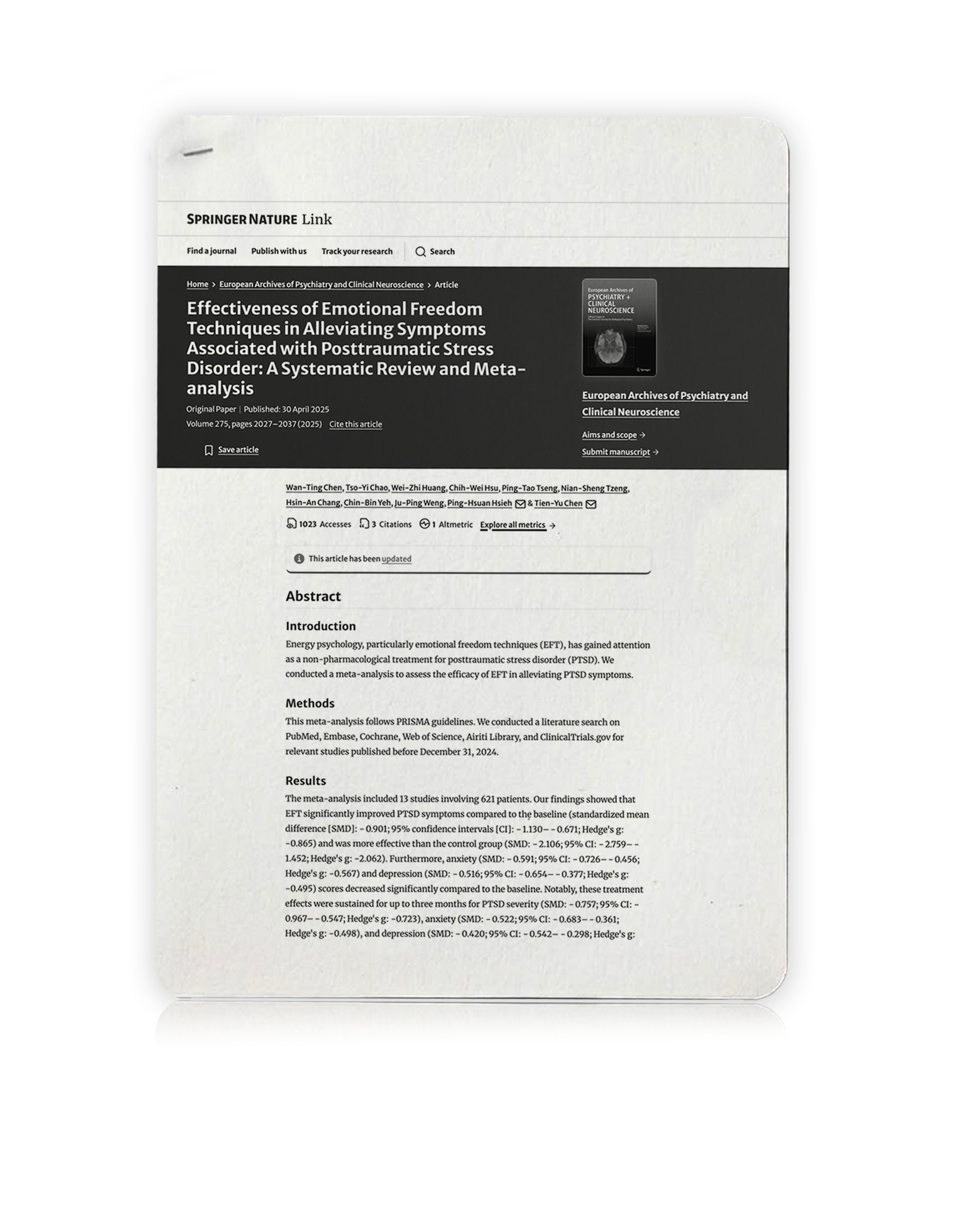
Effectiveness of Emotional Freedom Techniques in Alleviating Symptoms Associated with Posttraumatic Stress Disorder: A Systematic Review and Meta-analysis
Energy psychology, particularly emotional freedom techniques (EFT), has gained attention as a non-pharmacological treatment for posttraumatic stress disorder (PTSD). We conducted a meta-analysis to assess the efficacy of EFT in alleviating PTSD symptoms. Methods This meta-analysis follows PRISMA guidelines. Our findings showed that EFT significantly improved PTSD symptoms compared to the baseline (standardized mean difference [SMD]: − 0.901; 95% confidence
Wanting Chen, et. Al. European Archives of Psychiatry and Clinical Neuroscience 275(7):2027-2037
DOI: 10.1007/s00406-025-02000-4